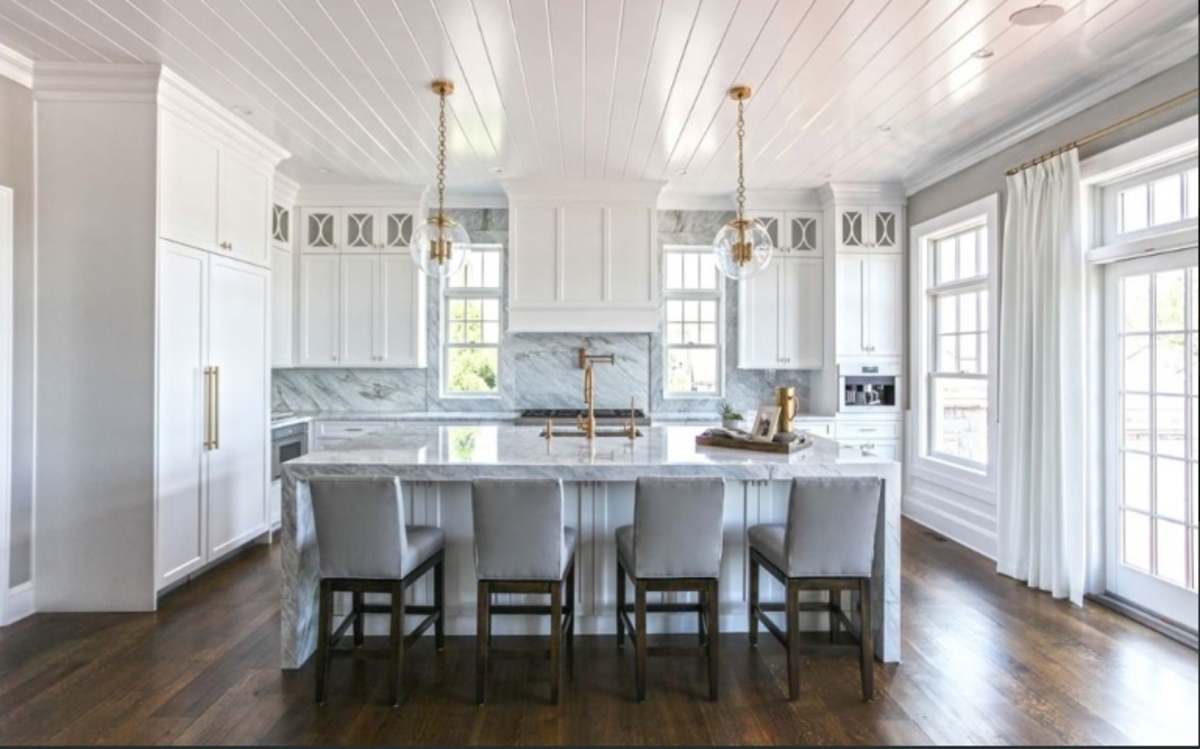
Older properties possess an undeniable architectural charm, but they often feature cramped, enclosed layouts that pose a significant challenge for modern storage requirements. Historic homes were constructed during an era when the preparation of food was entirely separated from the social areas of the house, resulting in small, isolated rooms with limited wall space. Modern homeowners face the difficult task of fitting contemporary appliances, large cookware collections, and extensive pantry supplies into these restricted footprints. Without careful planning, the room quickly becomes cluttered, making daily meal preparation frustrating. Overcoming these spatial limitations requires a highly analytical approach to storage, treating every cubic inch of the room as a valuable asset that must be allocated precisely to support modern family life.
The most effective strategy for increasing storage capacity in a small room is to build vertically. Standard upper cabinetry typically stops several inches below the ceiling, leaving a large, unused gap that simply collects dust. Taking the upper units entirely to the ceiling reclaims a massive amount of storage volume. While these highest shelves are difficult to reach on a daily basis, they provide the perfect location for storing seasonal items, holiday dishware, and large roasting pans that are only used a few times a year. This vertical strategy frees up the lower, more accessible zones for everyday plates, bowls, and dry goods, drastically improving the daily workflow of the space without expanding the actual footprint of the room.
Corner spaces represent another major area of wasted potential in historic layouts. The standard base corner unit is notoriously difficult to use, often becoming a dark cavern where Tupperware lids and small appliances disappear for years. To capture this lost volume, modern hardware solutions have been developed to bring the contents out to the user. Installing articulating corner pull-outs, often referred to as magic corners, transforms a dead corner into a highly organized, easily accessible storage zone. When the door is opened, a series of wire baskets pulls out on a specialized rail system, bringing heavy pots and pans directly into the light for immediate access.
The depth of the storage units also warrants careful consideration. Standard base units feature fixed shelves, forcing the user to kneel and dig through the front row of items to reach the back. This arrangement is highly inefficient and wastes a significant amount of vertical space between the shelves. Replacing standard base doors with banks of deep, full-extension drawers resolves this issue entirely. A drawer allows the homeowner to view the entire contents from above, making it simple to organize heavy cast iron skillets or stacks of ceramic dishes. The ability to pull the drawer fully out of the carcass ensures that the space at the very back is just as usable as the front edge.
Organizing the interior of the drawers and shelves is equally important for maximizing capacity. A disorganized drawer holds significantly less than one that has been carefully partitioned. Implementing adjustable peg systems in deep drawers keeps plates and bowls stacked neatly in place, preventing them from shifting and chipping when the drawer is opened. For dry goods and spices, custom wooden inserts and tiered racks ensure that small jars and boxes are visible and easily retrievable. Dedicating a tall, narrow pull-out unit near the cooker specifically for oils, vinegars, and spices keeps these essential cooking ingredients close at hand while consuming a mere six inches of horizontal floor space.
Finding the right hardware and specialized units for these tight historic layouts requires working with suppliers who understand spatial limitations. Homeowners struggling with small footprints often find that researching high-quality kitchen cabinets Connecticut yields a variety of intelligent, space-saving options. Local suppliers understand the architectural quirks of historic properties in the region and can recommend specific unit dimensions and internal organizers that solve these common problems. They can supply custom-sized boxes that fit precisely into awkward alcoves or under low windows, ensuring that absolutely no space is wasted. Investing in cleverly engineered hardware and custom sizing is the key to making a small room function like a much larger one.
Ultimately, the success of a storage strategy in a compact historic home relies entirely on intentionality. Every item must have a specific, designated home that makes logical sense for the person cooking. By extending units to the ceiling, installing advanced corner pull-outs, and replacing fixed shelves with deep drawers, homeowners can effectively double their usable storage capacity. The result is a clean, highly organized environment where cooking feels relaxed and enjoyable. Transforming a cramped, frustrating layout into a highly efficient workspace is entirely possible when you apply a thoughtful, data-driven approach to every inch of available space.
Conclusion
Overcoming the spatial limitations of a historic home requires a strategic approach to organization. By building vertically to the ceiling, replacing fixed shelves with deep drawers, and installing advanced corner pull-out systems, you can drastically increase your storage capacity without altering the original footprint of the room.
Call to Action
Stop struggling with inadequate storage in your historic home. Contact our design team today to discover intelligent, space-saving cabinetry solutions tailored perfectly to your compact layout.